If you're planning to build a mobile app in 2026, you might be asking yourself — should I hire a Flutter developer or a Swift developer? Both are powerful, both are backed by tech giants, and both can deliver exceptional apps. But they are fundamentally different in how they work, what they cost, and what they're best suited for.
In this guide, we break down everything you need to know about Flutter vs Swift development so you can make the smartest decision for your project.
What is a Flutter Developer?
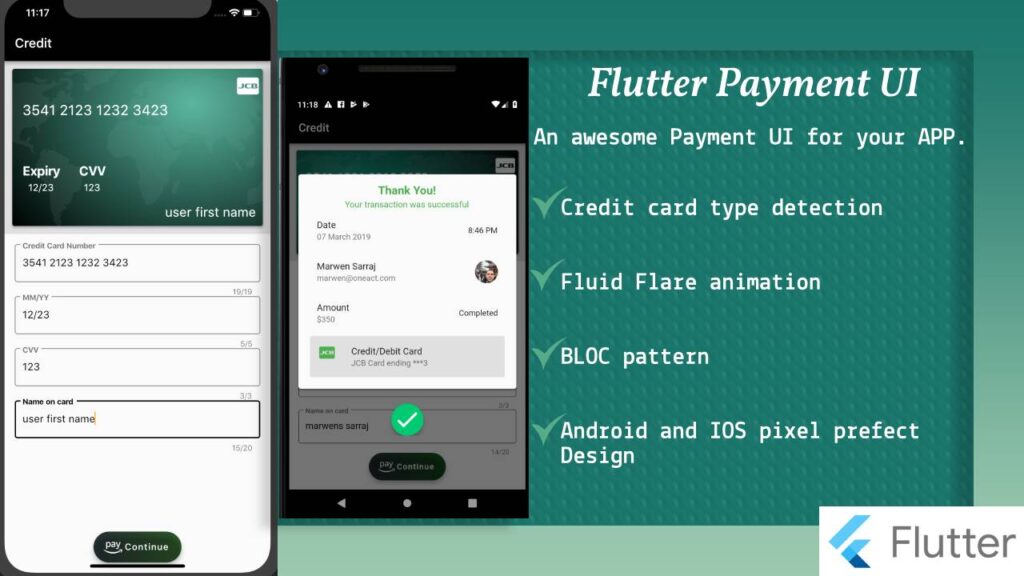
A Flutter developer builds apps using Flutter, Google's open-source UI framework powered by the Dart programming language. Flutter's biggest strength is its cross-platform capability — one single codebase that runs on Android, iOS, Web, and Desktop simultaneously.
Flutter compiles to native ARM code, delivering near-native performance across all platforms. Its own rendering engine gives developers pixel-perfect UI control on every screen and device.

A Flutter Developer is Best For:
- Apps targeting both Android and iOS at the same time
- Startups and businesses wanting faster, more affordable development
- Teams that need one developer instead of two
- Projects requiring a consistent, branded UI across all platforms
What is a Swift Developer?
A Swift developer builds apps natively for Apple platforms — iPhone, iPad, Mac, Apple Watch, and Apple TV — using Swift, Apple's modern programming language. Swift replaced Objective-C as Apple's primary language and is deeply integrated with Xcode, Apple's development environment.
Swift apps have full, direct access to every Apple API, hardware feature, and OS capability the moment Apple releases it. They follow Apple's Human Interface Guidelines and feel completely at home on iOS devices.
A Swift Developer is Best For:
- Apps built exclusively for Apple platforms
- Projects needing deep iOS hardware integration
- Apps targeting premium iPhone and iPad users
- Products where Apple ecosystem depth matters most
Flutter Developer vs Swift Developer: Full Comparison
1. Platform
Flutter supports Android, iOS, Web, and Desktop all from a single codebase. Swift is built exclusively for Apple platforms — iOS, macOS, watchOS, and tvOS.
2. Language
Flutter uses Dart, Google's modern programming language. Swift uses Apple's own Swift language, designed specifically for the Apple ecosystem.
3. Codebase
Flutter developers write one shared codebase that runs everywhere. Swift developers write platform-specific code for each Apple platform separately.
4. Performance
Swift delivers full native performance since it compiles directly to the platform. Flutter delivers near-native performance through its own rendering engine and ARM compilation — sufficient for most real-world apps.
5. Development Speed
Flutter is faster to develop with thanks to hot reload, a rich widget library, and a single codebase covering multiple platforms. Swift development is moderate in speed, requiring separate builds per Apple platform.
6. Cost
Flutter is more cost-effective overall — one developer covers both Android and iOS. Swift development costs more if you also need Android, as that requires a separate developer.
7. UI Control
Flutter gives developers complete, pixel-perfect control over the UI — your app looks identical on every device. Swift follows Apple's Human Interface Guidelines, delivering a look and feel that feels native to iOS users.
8. Hardware Access
Swift has full, unrestricted access to all Apple hardware APIs. Flutter has good hardware access but depends on community plugins for some platform-specific features.
9. Apple Feature Updates
Swift gets instant access to the latest Apple features the moment they are released. Flutter may experience a slight delay while the community builds plugin support for new Apple APIs.
10. Community Support
Swift has a very mature and well-established community backed by Apple. Flutter's community is rapidly growing and supported by Google with strong momentum.
11. Best For
Flutter is best for cross-platform apps targeting both Android and iOS. Swift is best for iOS-first premium apps that need deep Apple ecosystem integration.
When Should You Choose a Flutter Developer?
1. You Want Android and iOS Together
This is Flutter's number one advantage. One Flutter developer ships your app on both Android and iOS simultaneously — cutting your development cost by up to 40-60% compared to building two separate native apps.
2. You Are a Startup or on a Budget
Flutter is the go-to choice for startups building an MVP. One codebase, one developer, two platforms — you save time, money, and resources without meaningfully sacrificing quality or performance.
3. You Need Fast Time to Market
Flutter's hot-reload feature lets developers see changes instantly without restarting the app. Combined with a rich pre-built widget library, a Flutter developer can ship a polished, working product significantly faster than building separate native apps.
4. You Want Full UI Freedom
Flutter does not use native UI components — it draws every pixel itself using its own rendering engine. This means your app can have a unique, consistent, branded look that is identical on every device and platform, something native development cannot easily achieve.
5. You Plan to Expand Beyond Mobile
If your roadmap includes a web app or desktop version in the future, Flutter is a natural fit. The same codebase can be extended to Web, Windows, macOS, and Linux — making Flutter an incredibly future-proof choice.
When Should You Choose a Swift Developer?
1. You Are Building an iOS-Only App
If your entire audience is on iPhone and iPad — common for premium productivity tools, Apple Watch apps, or tools targeting high-income markets like the US, UK, and Australia — a Swift developer gives you the most polished, deeply integrated iOS experience possible.
2. You Need Cutting-Edge Apple Features
Apple regularly releases new frameworks and hardware features — ARKit, Core ML, HealthKit, Apple Pay, Face ID, and Live Activities, among others. A Swift developer gets instant access to these the moment Apple releases them, while Flutter often needs to wait for community plugins to catch up.
3. Your App Requires Deep Hardware Integration
Building a fitness app that connects deeply with Apple Watch sensors? A medical app interfacing with Apple Health? A Swift developer gives you direct, unrestricted access to Apple's hardware and OS APIs with no plugin dependency.
4. You Want the Most Native iOS Feel
Swift apps follow Apple's Human Interface Guidelines perfectly. Animations, gestures, transitions, and interactions feel exactly the way iOS users expect. If delivering a premium, native iOS experience is your top priority, Swift wins.
5. You Are Building for the Apple Ecosystem
If your product spans iPhone, iPad, Mac, Apple Watch, and Apple TV, Swift and SwiftUI give you a unified Apple ecosystem experience that Flutter simply cannot replicate.
Performance: Flutter vs Swift — Is There Really a Difference?
For the vast majority of apps — social platforms, e-commerce, productivity tools, SaaS products, and utilities — the real-world performance difference between Flutter and Swift is barely noticeable.
Flutter compiles to native ARM code and runs at smooth 60fps or 120fps on modern devices. Most users cannot tell the difference between a well-built Flutter app and a native Swift app.
The gap only becomes significant in extreme scenarios such as complex 3D rendering, intensive graphics, or apps that rely heavily on the very latest Apple-only hardware APIs. For 95% of mobile apps, Flutter performance is completely sufficient.
Cost Comparison: Flutter Developer vs Swift Developer
This is where Flutter has a clear, practical advantage for most businesses.
- A Swift developer builds for iOS only. If you also need Android, you must hire a separate Android developer — effectively doubling your development cost.
- A Flutter developer builds for both Android and iOS with one codebase — giving you two apps for roughly the price of one.
For startups, small businesses, and anyone watching their budget, this difference alone makes Flutter the more cost-effective choice in most cases.
Which One Should You Choose?
Here is a simple decision framework:
- Choose a Flutter Developer if you want cross-platform reach, faster development, lower cost, UI consistency, or you plan to expand to web and desktop in the future.
- Choose a Swift Developer if you are building iOS-only, need instant access to the latest Apple features, require deep hardware integration, or want the most premium native iOS experience possible.
For most modern app projects — especially startups, MVPs, and businesses targeting both Android and iOS — Flutter is the smarter, more cost-effective choice in 2026. One skilled Flutter developer delivers what would otherwise require two separate native developers.
That said, if your product is deeply rooted in the Apple ecosystem and your audience is iOS-first, a dedicated Swift developer will always have the edge in platform depth and native feel.
Final Thoughts
The Flutter developer vs Swift developer debate does not have one universal winner. It has the right answer for your specific project, your audience, and your budget.
Before you decide, ask yourself three simple questions:
- Who is my target audience — Android, iOS, or both?
- Do I need the very latest Apple-specific features?
- What is my budget and how fast do I need to launch?
Answer those honestly and the right choice becomes clear. And whichever path you choose, always invest in a skilled, experienced developer — because the technology only ever performs as well as the person building with it.